

# Kroger's Bold Leap: Decoding the Future of Work and Commerce in a Shifting World
When a titan like Kroger, a company that’s not just big but a bona fide "Retailer of the Century" and serves over 11 million customers daily, starts making significant strategic shifts, you know it’s not just about quarterly earnings. It’s a seismic event, a fascinating case study in how even the most established enterprises are grappling with the relentless pace of change in our digitally-driven world. We’re talking about a company with nearly 410,000 associates, and their recent moves—from demanding a full five-day return to office for general employees to shuttering automated e-commerce facilities—aren't just headlines; they're signposts pointing to a future that’s still very much in flux.
It’s easy to look at these decisions in isolation and scratch your head, maybe even feel a little cynical, but what I see is a fascinating, complex orchestration of human capital and technological optimization. Kroger isn't just reacting; they're actively trying to sculpt a new equilibrium, a future where they can move faster, solve problems more efficiently, and ultimately, serve us all better. It’s like watching a master chess player, making moves that seem counter-intuitive in the short term, but are all part of a grand, long-game strategy.
The Human Element: Re-Centering Collaboration
Let's talk about the return-to-office mandate. Starting in January, general office employees are back five days a week. This isn’t a small tweak; it’s a full pivot from a model that, for years, encouraged hybrid work. EVP Tim Massa’s rationale? In-person collaboration helps Kroger "move faster, problem-solve, and align priorities." And honestly, when I first saw this, I thought, "Wow, that's a bold statement in an era where 'flexibility' is almost a corporate mantra." But it makes you think, doesn't it? Is there an inherent, almost alchemical magic that happens when people are physically together, bouncing ideas off each other, reading body language, sharing impromptu coffee breaks that spark the next big idea?
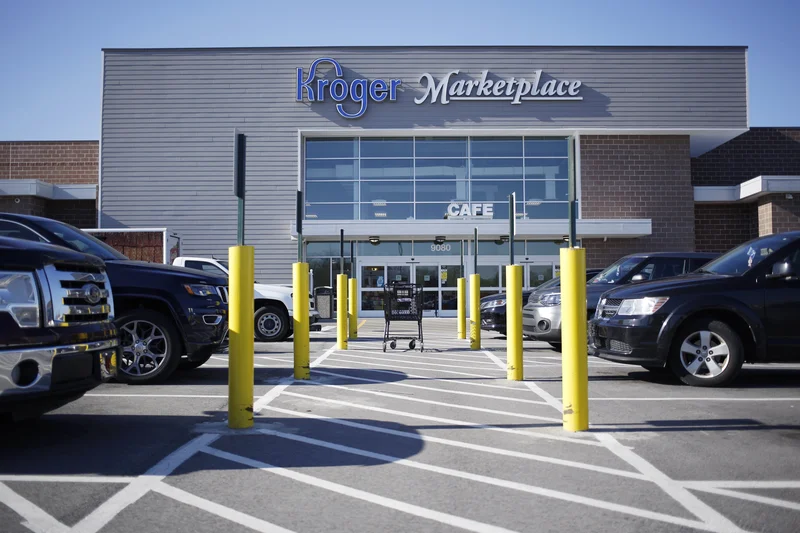
This isn't just about getting butts in seats; it’s about a company’s fundamental belief in how innovation truly happens. They’ve experimented with two, then three-to-four days a week since 2021 and late 2023, and now they’re going all-in. It’s a massive experiment, really, on the scale of a social science study, to see if the gains in "speed" and "problem-solving" outweigh the potential impact on employee satisfaction or even the environmental footprint of daily commutes. What does this decision tell us about the limits of virtual collaboration, even with all our amazing tools? And perhaps more importantly, what does it signal for the broader corporate landscape—are we seeing the pendulum swing back to the office, or is Kroger simply charting its own unique course, a path less traveled in the post-pandemic work world?
The Digital Dance: Rethinking E-commerce Efficiency
Then there’s the other side of the coin: the e-commerce strategy. Just before Thanksgiving, Kroger unveiled plans to close automated facilities in Wisconsin, Maryland, and Florida, projecting a whopping $400 million improvement in e-commerce operating profit by 2026. This isn't just a budget cut; it's a strategic re-evaluation of how they leverage technology to deliver goods. In simpler terms, they're not abandoning e-commerce, they're refining it, making it leaner, more effective, and ultimately, more profitable. Imagine, if you will, a massive cargo ship trying to optimize its route across a vast ocean. Sometimes, to go faster and more efficiently, you have to shed some ballast, even if that ballast was once considered cutting-edge.
This move is a direct investment in the future, with that $400 million slated for lower prices, better store conditions, and improved operating margins. It speaks to a profound understanding that the customer experience isn't just about if you can get something delivered, but how sustainably that delivery model can operate. It’s a testament to the idea that technology, while powerful, isn't a silver bullet. It requires constant iteration, a willingness to dismantle what no longer serves the ultimate goal. And this goal, for Kroger, is clearly about creating a robust, integrated shopping experience, whether you're grabbing a Home Chef holiday meal bundle for Thanksgiving convenience or doing your weekly grocery run. This isn't just about brick-and-mortar versus online; it's about a seamless, intelligent blend of both, where the physical store might even become a more crucial hub for digital fulfillment.
The Great Unfolding
What we're witnessing at Kroger is nothing short of a corporate metamorphosis. It’s a bold, calculated risk to redefine what a modern grocery giant looks like, how it operates, and how it connects with its people and its customers. We’re talking about a company that’s trying to navigate the choppy waters of the 21st century, with one hand on the steering wheel of human connection and the other adjusting the sails of technological efficiency. It’s a delicate balance, and the outcome will be a masterclass in strategic adaptation. Will this blend of intensified in-person collaboration and streamlined digital operations be the blueprint for other legacy companies? Only time will tell, but it's a journey I, for one, am watching with genuine excitement and a healthy dose of intellectual curiosity.